



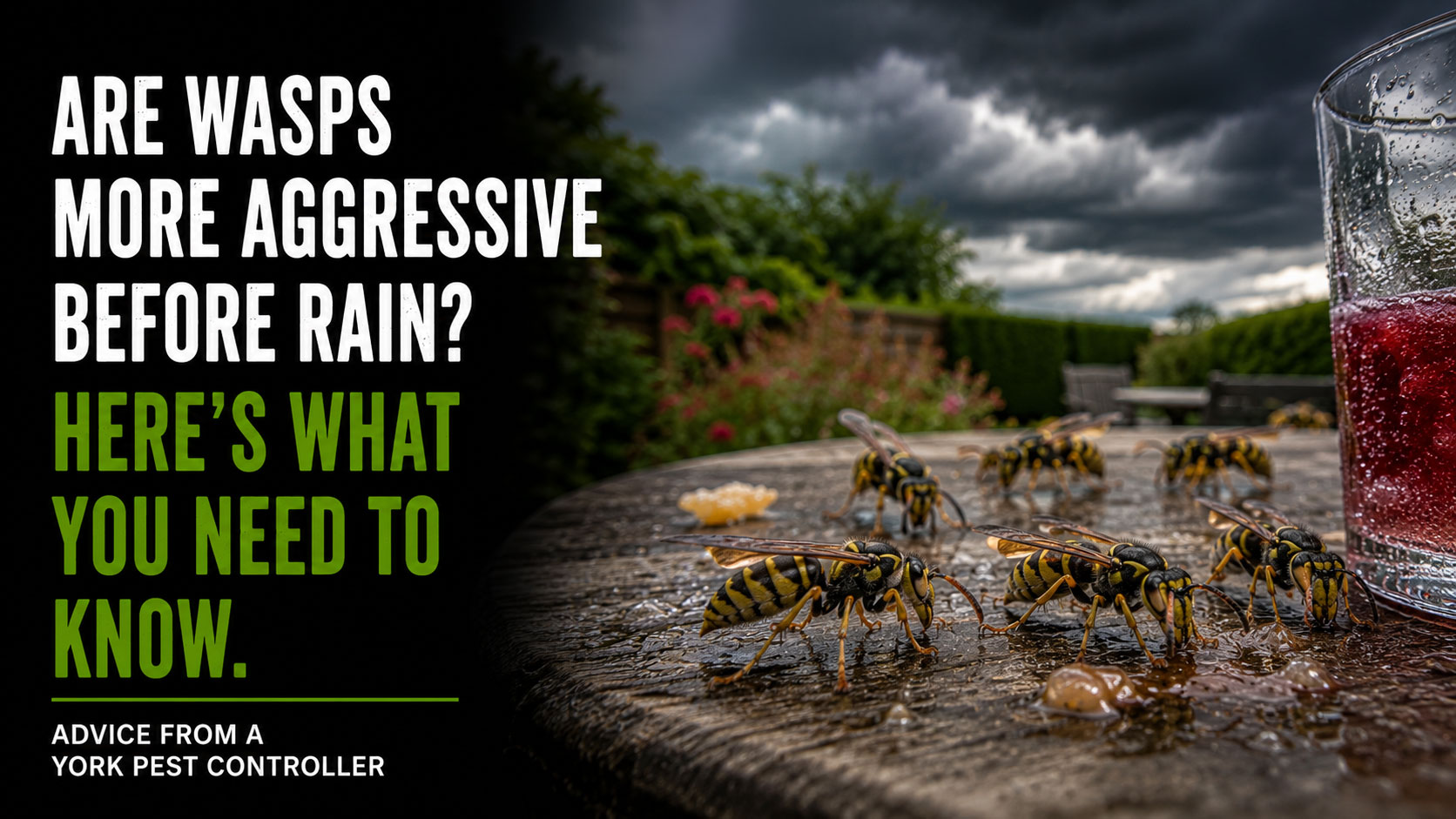
People often say that wasps seem worse just before it rains. If you’ve been sitting in the garden on a warm afternoon only to find wasps suddenly becoming more persistent, you’re not imagining it. While the weather doesn’t make wasps angry overnight, changing conditions can affect how they behave and where you are likely to notice them.
During July and August, wasp colonies are approaching their busiest time of year across York and North Yorkshire. Thousands of worker wasps leave the nest every day searching for food, and changes in temperature, humidity and air pressure can all influence their activity.
Why people notice more wasps before rain
Many people report seeing more wasps shortly before a summer shower. Although there is still debate about exactly how much weather influences insects, pest controllers regularly find that warm, humid conditions before rain often coincide with increased wasp activity.
Several factors can contribute.
Warm, humid weather
The hours before rain often feel warm and close. These conditions encourage wasps to remain active while they continue searching for sugary foods and protein to feed the growing colony.
By July, a single nest may contain several thousand worker wasps, meaning there are simply more insects flying around than earlier in the summer.
They may forage more before bad weather
Like many insects, wasps appear to take advantage of favourable flying conditions before heavier rain arrives.
If poor weather is expected, worker wasps may spend more time collecting food while they can, increasing the chances of coming into contact with people.
We spend more time outside
One of the biggest reasons people notice wasps before rain is because they are often outside enjoying the warm weather.
Garden furniture, barbecues, picnics, children’s drinks, pet food and bins all provide attractive food sources. If dozens of wasps are already searching the area, it doesn’t take long before one discovers your table.
What happens once the rain starts?
Heavy rain usually reduces visible wasp activity.
Wasps do not like flying in heavy rain because wet wings make flight difficult and increase the risk of injury. Most return to the nest and remain there until conditions improve.
This often creates the impression that the rain has driven them away completely, only for them to reappear once the weather brightens again.
Does rain affect the nest?
A healthy wasp nest is surprisingly well protected.
Whether it’s inside a loft, wall cavity, garage or shed, the nest itself is normally sheltered from the weather. Light rain rarely causes any problems for an established colony.
However, after rain stops, worker wasps quickly resume foraging, especially if the weather becomes warm and sunny again.
Why wasps seem worse in July
July is one of the busiest months for wasps.
The queen has spent the spring building the colony, laying eggs and producing workers. By mid-summer those workers are caring for thousands of developing larvae while also searching constantly for food.
As colony numbers increase, so does the likelihood of seeing wasps around:
- Patios
- Outdoor cafés
- Beer gardens
- Parks
- Dustbins
- Compost bins
- Fallen fruit
- Garden tables
- Children’s drinks
Even if the weather plays only a small part, the sheer number of wasps at this time of year makes encounters far more common.
What should you do if wasps become a problem?
If you’re eating outdoors, there are a few simple ways to make your garden less attractive to wasps.
Keep food covered whenever possible, clear away empty plates promptly and avoid leaving sugary drinks uncovered. Bin lids should remain closed, and fallen fruit should be picked up regularly if you have fruit trees.
If wasps are repeatedly appearing in the same area, it is worth looking around your property for signs of a nearby nest.
Common locations include:
- Lofts
- Roof eaves
- Wall cavities
- Garden sheds
- Garages
- Air bricks
- Under decking
- Bird boxes
You may notice a steady stream of wasps flying to and from a small gap. This is often the clearest indication that a nest is established nearby.
Should you remove a wasp nest yourself?
DIY wasp nest treatments can be risky.
Disturbing an active nest may cause hundreds of worker wasps to defend it, increasing the risk of multiple stings. This is particularly dangerous if the nest is inside a loft, roof space or wall cavity where escape routes are limited.
Professional treatment allows the nest to be dealt with safely using products designed specifically for wasp control.
Pest Assured can help
If you’ve noticed increasing wasp activity around your home or think there may be a nest nearby, Pest Assured provides professional wasp nest treatment across York and the surrounding areas of North Yorkshire.
Whether the nest is in a roof, garage, shed, wall cavity or garden structure, we can identify the source of the problem and treat it safely, helping you enjoy your garden without worrying about wasps.
If you’re unsure whether you’ve found a wasp nest, we’re always happy to offer advice before arranging a visit.