



Common Places to Check
If you’ve started seeing wasps flying to and from the same part of your house, there’s a good chance they’ve already chosen a place to build a nest. During the summer, wasps look for sheltered locations that are dry, protected from the weather and rarely disturbed. Many nests remain hidden until the colony has grown large enough for people to notice increased activity.
Knowing where wasps commonly build nests can help you spot a problem early and avoid making it worse.
Roofs and Loft Areas
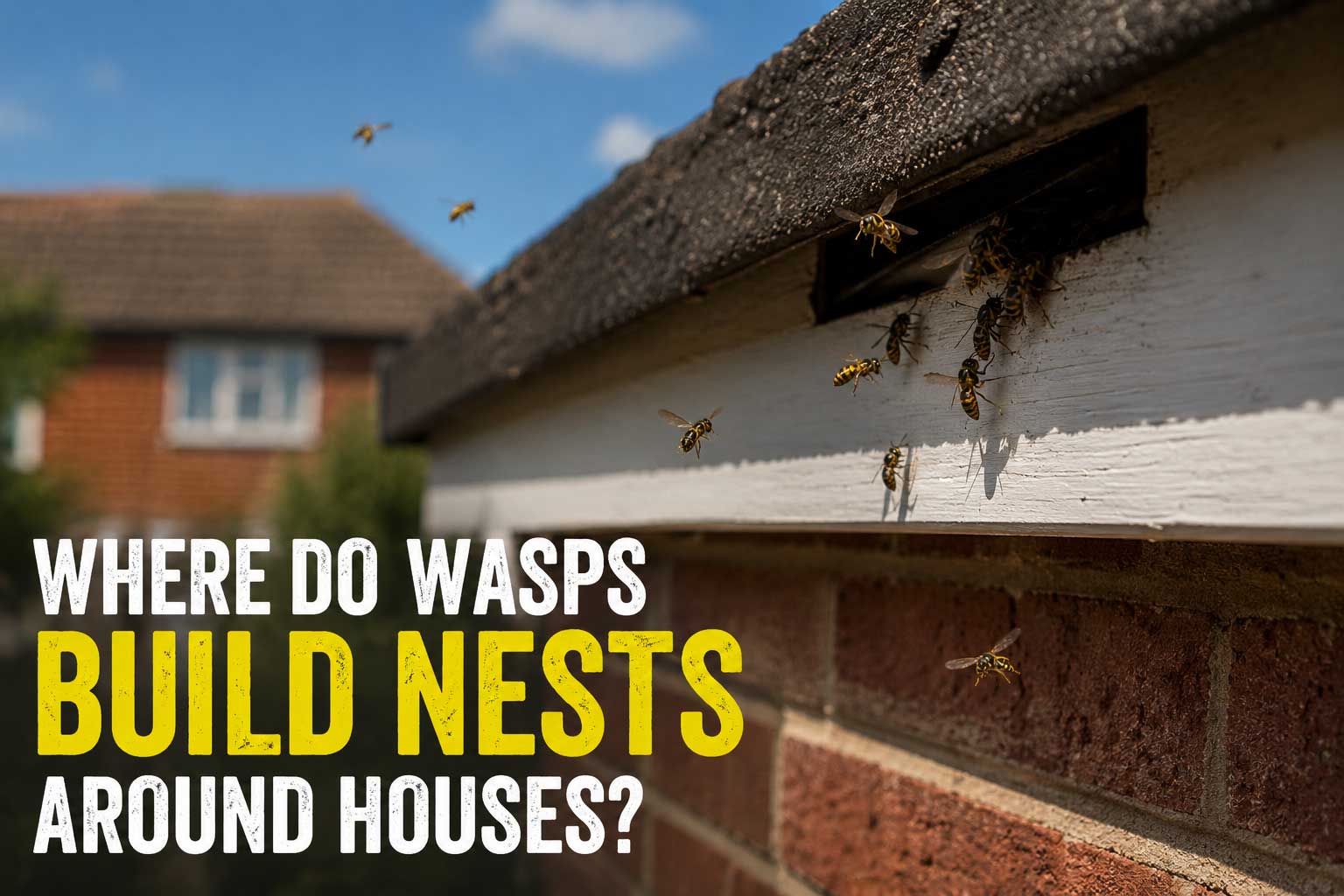
One of the most common places for a wasp nest is inside the roof of a house. Small gaps beneath roof tiles, damaged soffits or openings around the eaves allow wasps to enter without being noticed.
Once inside, they’ll often build a nest attached to roof timbers where it stays warm, dry and protected. In many cases, you’ll never actually see the nest because it’s hidden inside the loft or behind insulation.
A common sign is seeing several wasps repeatedly flying to exactly the same point on the roof before disappearing through a small gap.
If you notice this behaviour, it’s best to leave the area alone rather than trying to block the entrance.
Wall Cavities
Modern and older properties alike often have wall cavities that provide ideal nesting sites.
Wasps can squeeze through surprisingly small gaps around:
- Air bricks
- Pipework
- Damaged mortar
- Cable entry points
- Cracks around window frames
Once inside the cavity, they can build a nest that remains completely hidden from view.
Sometimes homeowners hear a faint buzzing sound inside a wall during warm weather, particularly in upstairs rooms or loft conversions.
Soffits and Fascias
The area beneath the roofline is another favourite location.
Small openings in soffits and fascia boards provide easy access into sheltered voids where nests can develop unnoticed for weeks.
If you regularly see wasps disappearing beneath the edge of the roof, it’s worth having the area inspected before the colony becomes much larger.
Sheds and Garages
Garden buildings are another common choice.
Sheds, garages and workshops are often quiet places with plenty of sheltered corners, roof spaces and timber beams where nests can be attached.
You might discover a nest when opening the door for the first time in several days or while retrieving garden equipment.
Before entering a shed where you’ve seen wasps flying, take a moment to watch where they’re travelling.
Trees and Hedges
Not every nest is attached to a building.
Some wasps build nests in:
- Dense hedges
- Shrubs
- Hollow tree trunks
- Low tree branches
These nests can be difficult to spot until you accidentally walk close to them.
Gardeners sometimes only discover a nest when trimming a hedge or cutting back overgrown plants, which can quickly disturb the colony.
Garden Structures
Pergolas, gazebos, children’s play equipment and decorative garden features can also provide sheltered spaces.
Although these nests are usually easier to see than those inside houses, they should still be left alone until they can be dealt with safely.
Even a relatively small nest can contain hundreds of defensive wasps.
Air Bricks and Vents
Air bricks are designed to improve ventilation beneath floors, but they can also provide access into hidden cavities.
If wasps are regularly entering an air brick, it’s likely the nest is behind it rather than inside the brick itself.
Blocking the opening yourself can trap wasps inside the property or force them to find another route out, sometimes into living areas.
Why You Shouldn’t Block the Entrance
One of the biggest mistakes people make is sealing the hole where wasps are entering.
Although it may seem like a simple solution, it rarely solves the problem.
The colony is still active behind the wall or roof space, and the trapped wasps will often look for another exit. This can result in wasps appearing inside lofts, bedrooms or other parts of the property.
Professional treatment deals with the nest first, allowing activity to stop naturally before any repairs or sealing work is carried out.
Signs You May Have a Wasp Nest
You don’t always need to see the nest itself.
Common signs include:
- A steady stream of wasps flying to one specific location.
- Wasps disappearing beneath roof tiles or soffits.
- Increased wasp activity around one side of the house.
- Buzzing sounds from walls or loft spaces.
- More wasps appearing around the garden than usual.
The earlier a nest is identified, the easier it is to deal with before numbers increase further.
Wasp Nest Removal Across York and North Yorkshire
At Pest Assured, we regularly remove wasp nests from lofts, roof spaces, wall cavities, sheds, garages and gardens throughout York and the surrounding areas.
If you’ve noticed wasps repeatedly entering the same hole or suspect a nest around your property, it’s worth having it checked before the colony continues to grow.
Our professional treatments are designed to deal with the nest safely, allowing you to enjoy your home and garden without the worry of increasing wasp activity.