



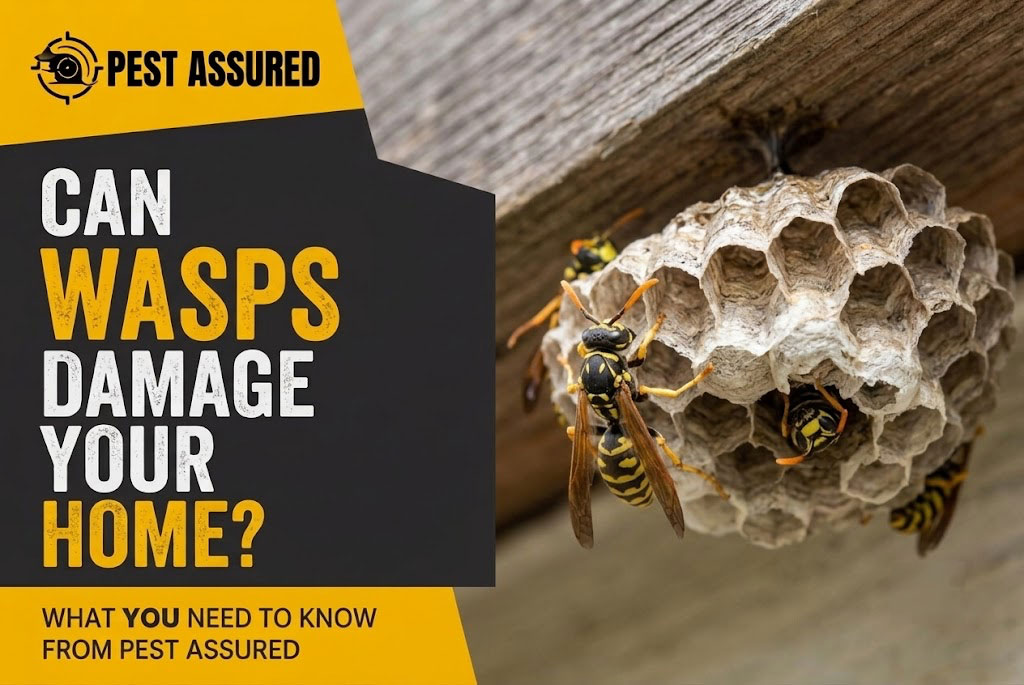
If you’ve noticed wasps flying in and out of your roof, loft, shed or wall, it’s natural to wonder whether they’re damaging your property.
The good news is that wasps rarely cause serious structural damage to a house. However, they can create problems that become more expensive if left untreated, particularly when a nest grows throughout the summer.
Do wasps chew wood?
Yes. Wasps scrape small amounts of weathered timber from fences, sheds, wooden garden furniture and occasionally roof timbers.
They don’t eat the wood. Instead, they chew the fibres, mix them with saliva and use the material to build their distinctive paper nests.
Most of the time, this causes only minor cosmetic damage. A healthy wooden structure is very unlikely to be weakened by wasps collecting fibres.
Can a wasp nest damage your loft?
The nest itself usually won’t damage your loft.
A wasp nest is surprisingly lightweight, even when it has grown to the size of a football. It is normally attached to a roof timber or another solid surface and doesn’t place enough weight on the structure to cause any concern.
The bigger issue is where the wasps choose to build.
Large numbers of wasps flying through small gaps in soffits, roof tiles or vents can become a nuisance, especially if they begin finding their way into the house.
Can wasps damage insulation?
Not usually.
Wasps may build a nest above or beside loft insulation, but they don’t normally feed on or destroy the insulation itself.
The main problem is that the nest can make it difficult or unsafe to access your loft while it remains active.
Can wasps damage plasterboard or walls?
Wasps don’t bore through plasterboard, brick or masonry.
If they appear to be entering through a wall, they’re almost always using an existing gap or cavity rather than creating a new one.
They commonly enter through:
- Gaps beneath roof tiles.
- Air bricks.
- Soffits and fascia boards.
- Wall cavities.
- Vents.
- Small cracks around pipework.
Can wasps damage electrical wiring?
This is uncommon.
Unlike rodents, wasps don’t gnaw electrical cables.
However, if a large nest develops close to wiring or electrical equipment, it can make inspection or repair work difficult until the nest has been treated safely.
Can a wasp nest get bigger than expected?
Yes.
A queen starts a nest alone in spring, but by late summer it may contain several thousand worker wasps.
As the colony grows, you’ll often notice increasing numbers of wasps flying to and from the entrance throughout the day.
If the entrance is close to a doorway, patio or children’s play area, the risk of stings also increases.
Should you leave a wasp nest alone?
It depends on its location.
A small nest in an area that is never used may simply die out at the end of the season.
However, if the nest is attached to your home, close to windows, doors, paths or outdoor seating, arranging treatment is usually the safest option.
Attempting to remove or block the entrance yourself can provoke thousands of defensive wasps, making the situation much more dangerous.
Professional wasp nest removal in York
If you’ve noticed wasps regularly flying into the same part of your property, it’s likely that a nest is already established.
At Pest Assured, we provide professional wasp nest removal throughout York and the surrounding areas. We can identify where the nest is located, treat it safely and advise when it is safe to use the area again.
If you’re unsure whether the activity you’re seeing is normal or whether a nest is developing, contact Pest Assured for straightforward advice and professional treatment.