



Wasps are part of summer, especially around York and North Yorkshire, but there is a clear difference between the odd wasp passing through and regular activity that points to a nest nearby.
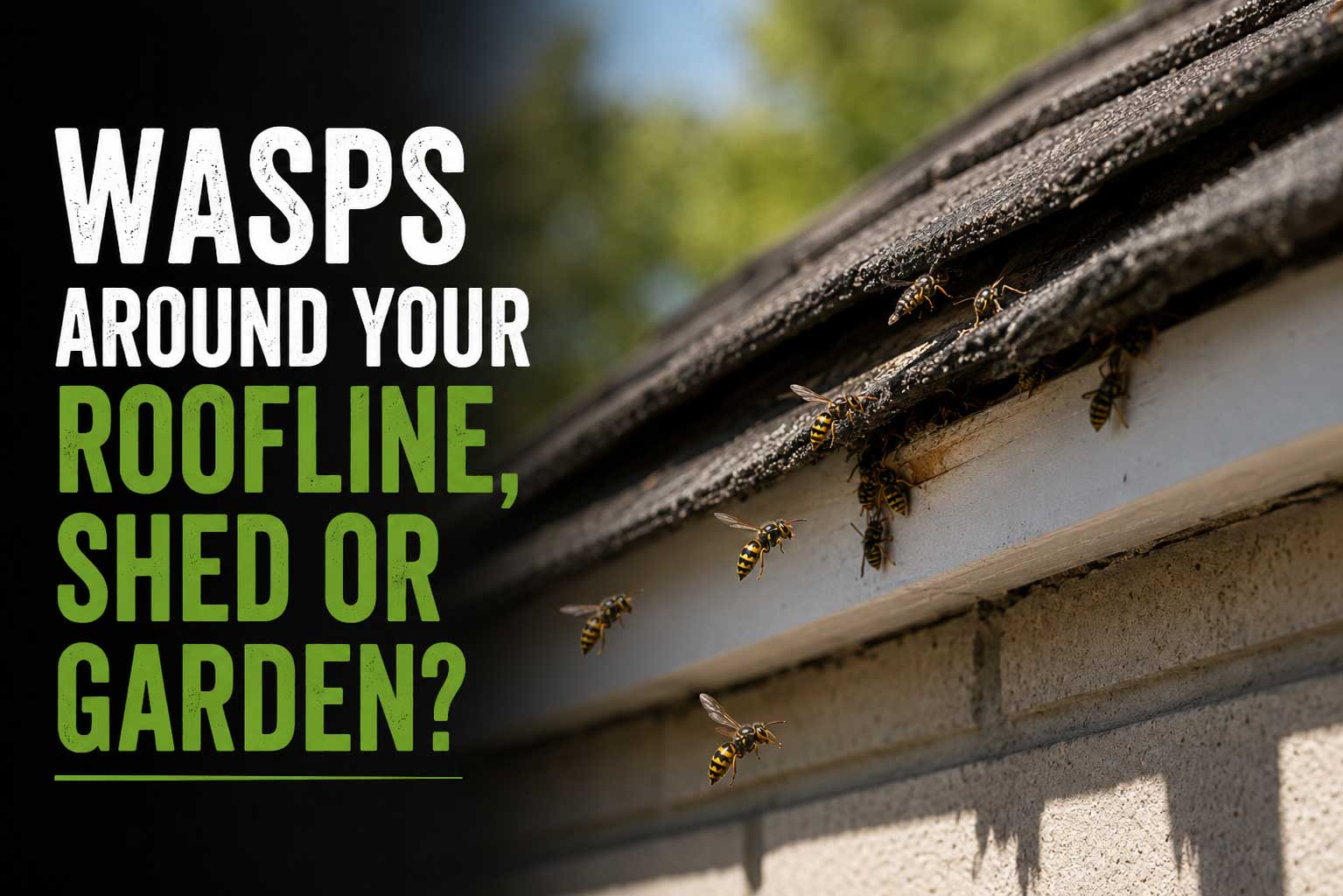
At this time of year, it is common to see wasps moving in and out of roof tiles, fascias, air bricks, sheds, garages, loft areas, wall cavities and garden buildings. In many cases, people first notice the same flight path being used again and again. That repeated movement is usually more important than the number of wasps seen at any one time.
One or two wasps around a garden table does not automatically mean there is a nest on the property. Several wasps using the same gap every few seconds is different. That usually means they have found an access point and are travelling to and from an established nest.
Repeated wasp activity usually means there is a nest close by
A working wasp nest has constant movement. The wasps are not simply wandering around. They are leaving the nest to search for food and returning to feed the colony.
Common signs include:
- Wasps entering a gap under roof tiles.
- Wasps disappearing behind fascia boards or soffits.
- Wasps flying in and out of a shed, garage or outbuilding.
- Wasps gathering around a small hole in brickwork or timber.
- A steady line of wasps using the same route throughout the day.
- Wasps becoming more noticeable when the weather is warm and dry.
The key thing to watch is the pattern. If they are using the same entry point repeatedly, there is a good chance there is a nest behind it.
Rooflines are one of the most common places to see wasp activity
Roof edges, fascias, soffits and gaps under tiles are common areas for wasps to use. The nest itself may not be visible from outside. It may be tucked into a roof void, behind boarding, inside a cavity or under the eaves.
This is where people often make the mistake of thinking the problem is small because they cannot see the nest. A hidden nest can still be active and can still cause problems, especially if it is close to windows, doors, patios, driveways or areas where children and pets are regularly passing.
If wasps are entering near a bedroom window, bathroom vent or loft area, it is worth getting it checked before the activity increases further.
Sheds and garages can quickly become difficult to use
Wasps often use sheds, garages and garden buildings because they offer shelter and quiet. Nests can be built in roof timbers, wall voids, behind stored items or in corners that are not used every day.
The issue is that people usually need access to these places. Lawnmowers, tools, golf clubs, bikes, garden furniture and household items are often stored in them. A nest inside or close to a shed entrance can make it difficult to use the building safely.
If wasps are going in and out of a shed or garage, avoid opening doors repeatedly, moving stored items around or trying to find the nest yourself. Disturbing the nest is often when the risk of stings increases.
Garden nests are not always easy to spot
Some wasp nests are found in hedges, compost areas, under decking, in banks, in old mouse holes, around tree roots or inside garden structures. Ground-level nests can be a particular problem because they are easier to disturb by accident.
People may first notice wasps appearing when mowing the lawn, trimming a hedge, moving pots, clearing weeds or walking across a certain part of the garden.
If there is sudden wasp activity from the ground or from a hedge, it is best to stop working in that area and keep children and pets away from it. Trying to poke, dig or spray the area can make the wasps defensive.
Do not block the entrance hole
One of the most common mistakes is trying to block the hole where the wasps are entering. This can make the situation worse.
If the entrance is blocked while the nest is still active, the wasps may look for another way out. In some cases, that can push them into the property, loft, living area or another part of the building. It can also make the nest more defensive.
Blocking the hole does not remove the nest. It only interferes with the access route.
A professional treatment deals with the active colony properly. Once the nest is inactive, the area can be assessed and any repair work considered if needed.
Avoid DIY treatment if the nest is in a roof, wall or awkward area
DIY sprays are often aimed at visible nests or very small situations. They are not ideal when the nest is hidden behind a roofline, wall, fascia, shed lining or garage structure.
The difficulty is that the visible entry point is not always the nest itself. Spraying around the entrance may not reach the colony properly. It may also put the person too close to a busy wasp route.
There is also the access issue. Rooflines, ladders, lofts, sheds full of stored items and narrow side paths all increase the risk. A wasp nest treatment is not only about the product used. It is also about understanding where the nest is likely to be, where the activity is coming from and how to treat it safely.
When to call Pest Assured
It is sensible to get Pest Assured involved if:
- Wasps are using the same entrance point repeatedly.
- The activity is near a doorway, window, patio, driveway or children’s play area.
- Wasps are entering a roofline, loft, shed, garage or wall cavity.
- Someone in the property is anxious about wasps or at risk from stings.
- You need to use the garden, shed or garage but cannot do so comfortably.
- The activity appears to be increasing.
- You cannot see the nest but can see regular movement.
- You have already tried to deal with it and the activity has not stopped.
A quick check can often confirm whether it is likely to be a nest and whether treatment is needed.
Local wasp nest treatment around York and North Yorkshire
Pest Assured works across York and the surrounding areas, including Easingwold, Huby, Thirsk, Boroughbridge, Pocklington and nearby villages.
Because Pest Assured is local, the advice is based on the type of properties and pest activity commonly seen across this part of North Yorkshire. Older houses, farm buildings, garden structures, roof voids, sheds, garages and outbuildings can all provide suitable places for wasps to build.
The aim is straightforward: identify the likely nest location, treat it correctly and help the property owner avoid unnecessary risk.
What happens after treatment?
After a professional wasp nest treatment, activity does not usually stop instantly. Wasps that are away from the nest may still return for a period of time. Activity normally reduces as the treatment takes effect.
It is important not to interfere with the nest area immediately after treatment. Keep away from the entrance point and allow the treatment to work.
In most cases, the old nest does not need to be physically removed unless it is causing a specific issue or is accessible and safe to deal with later. Wasps do not reuse the same nest the following year, although a property with suitable access points can attract new nests in future seasons.
Reducing the chance of future wasp problems
Not every wasp nest can be prevented, but there are sensible steps that may reduce risk:
- Keep external bins closed.
- Avoid leaving food waste uncovered.
- Seal obvious gaps once an old nest is inactive.
- Keep sheds and garages tidy where possible.
- Check rooflines, air bricks and timber structures during spring and early summer.
- Deal with early signs before activity becomes heavy.
- Do not leave fallen fruit sitting in the garden during late summer.
These steps do not guarantee a wasp-free property, but they can help reduce attraction and make early signs easier to spot.
The main thing to watch is the flight path
If there is one practical point to remember, it is this: look for the flight path.
A wasp flying around the garden may simply be foraging. Wasps flying in and out of the same gap all day are more likely to be connected to a nest.
If the activity is regular, close to the property or making it difficult to use part of the home or garden, it is better to get it checked than leave it until the nest becomes larger and more active.
For wasp nest treatment in York, Easingwold, Thirsk, Huby and surrounding areas of North Yorkshire, contact Pest Assured.