



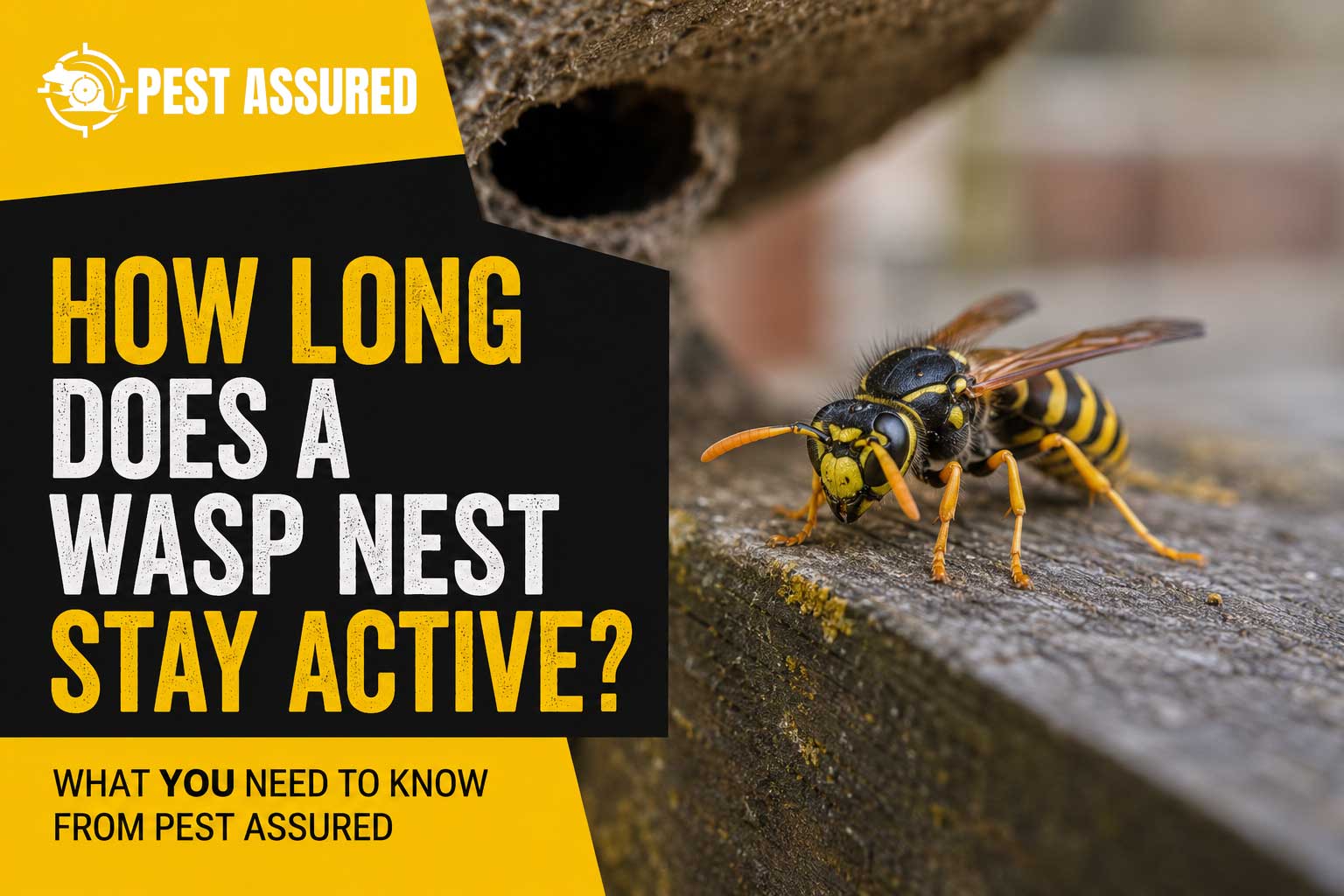
Most people only notice a wasp nest once it has become busy.
You might see a steady stream of wasps flying to and from a gap in the roof, a shed, an air brick or a hedge, leaving you wondering how long they’ll be there. Will the nest disappear on its own, or is it likely to remain active for months?
Understanding the life cycle of a wasp nest can help you decide whether to leave it alone or arrange professional treatment.
A wasp nest only lasts for one season
A common misconception is that wasps return to the same nest year after year.
In reality, a wasp nest is only active for a single season. Each spring, a queen wasp that has survived the winter starts building a completely new nest. She begins by creating a small paper nest and laying the first batch of eggs herself.
Once those worker wasps hatch, they take over expanding the nest while the queen remains inside laying more eggs.
When is a wasp nest at its busiest?
A nest grows steadily throughout spring and summer.
By July and August, it can contain several thousand wasps, depending on the species and conditions. This is usually when homeowners first become aware of a problem, as wasp activity around the nest becomes much more noticeable.
You’ll often see wasps following the same flight path as they leave and return with food for the colony.
What happens in autumn?
Towards the end of summer, the colony begins to change.
The queen starts producing new queens and male wasps instead of workers. As food becomes scarcer, worker wasps become more active around gardens, bins and outdoor eating areas, which is why they often seem more aggressive during late summer.
As temperatures fall, the original queen, the workers and the males gradually die.
Only the newly fertilised queens survive the winter by finding sheltered places such as roof spaces, sheds, tree bark or wall cavities.
Will wasps use the same nest again?
No.
Once a nest has died out, it won’t become active again the following year.
However, a new queen may decide to build a fresh nest nearby if the location offers good shelter. This can make it appear as though the old nest has been reused when, in fact, it’s a completely new colony.
Leaving an old nest in place doesn’t usually cause any problems, although some people choose to have it removed for peace of mind or if they’re carrying out building work.
Should you wait for the nest to die naturally?
It depends on where the nest is located.
If it’s well away from people and isn’t causing any issues, it may be possible to leave it until the colony naturally dies out later in the year.
However, if the nest is close to your home, near doors, windows, patios or children’s play areas, waiting may not be the safest option. Large colonies can become defensive if the nest is disturbed, increasing the risk of painful stings.
Professional treatment removes the problem quickly and reduces the risk of disturbing the nest yourself.
Avoid tackling a wasp nest yourself
Many DIY attempts involve sprays or trying to block the entrance.
Unfortunately, this often makes the wasps more defensive and can make the situation worse. Wasps may also find another way out of the nest, potentially bringing them into roof spaces or inside the property.
Professional pest controllers have the equipment and experience to treat nests safely and effectively.
Need advice about a wasp nest?
If you’ve noticed wasps regularly flying to and from the same location, it’s worth having the nest identified before it grows any larger.
A prompt inspection can help you decide on the safest course of action and prevent the problem becoming more serious as the summer progresses.