



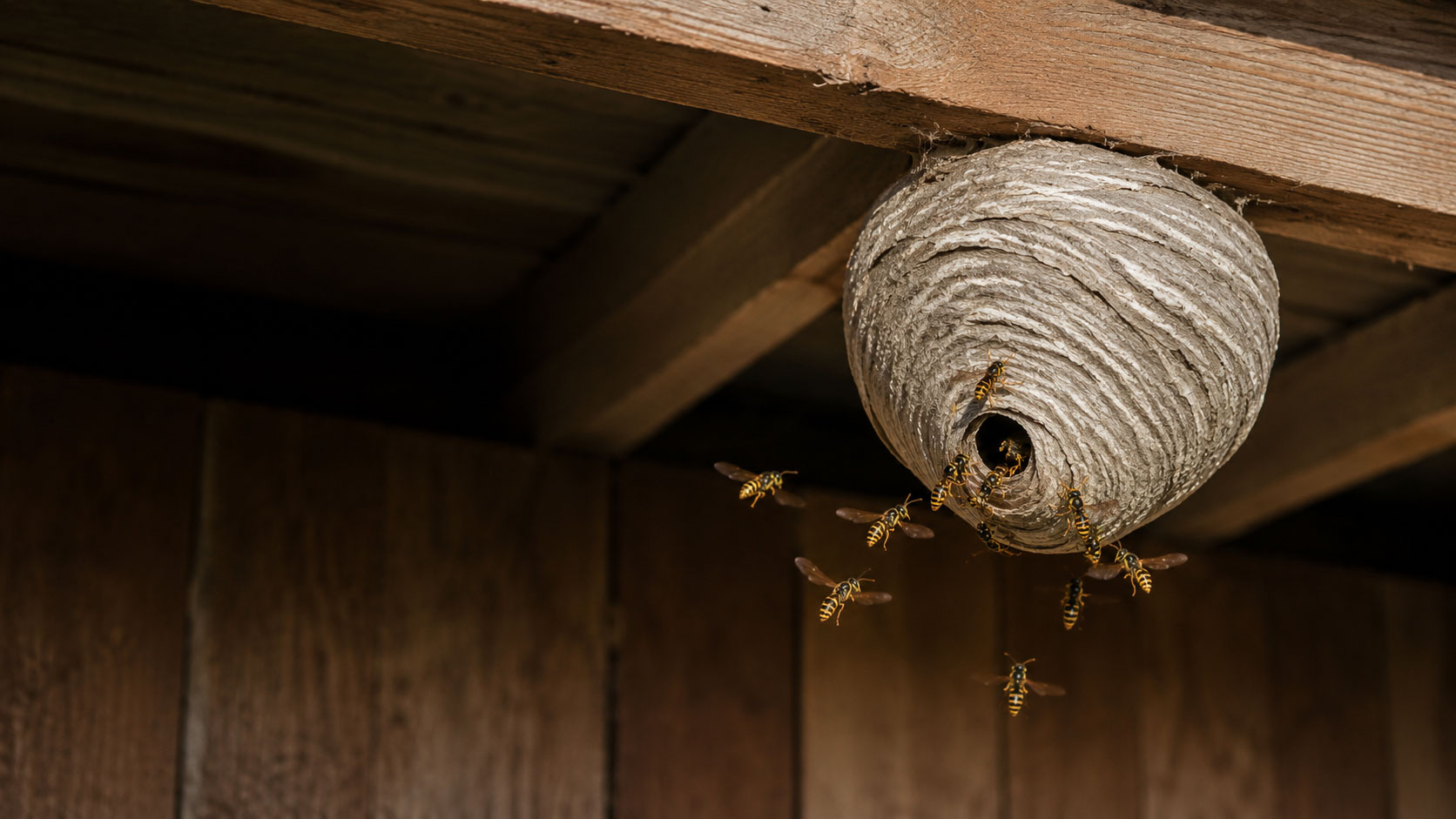
During spring and summer, wasps become increasingly active across York and the surrounding villages. While a few wasps in the garden may not seem like a major concern, a nest close to your home or business can quickly become a serious problem.
Many people first notice wasps flying around rooflines, sheds, garages or wall cavities. What often starts as a handful of insects can soon develop into a large colony containing thousands of wasps.
Understanding the risks and knowing when to seek professional help can help prevent unpleasant encounters and potential injury.
Why Do Wasps Build Nests Around Homes?
Wasps look for sheltered locations that provide protection from the weather and predators. Common nesting locations include:
- Loft spaces
- Roof voids
- Sheds and outbuildings
- Garages
- Wall cavities
- Air bricks
- Garden structures
- Under decking
A queen wasp begins building the nest during spring. As the colony grows throughout summer, worker wasps take over nest expansion and food gathering duties.
By late summer, nests can become very large and highly active.
Problems Caused by Wasps
Many people underestimate the risks associated with a wasp nest.
Painful Stings
Unlike bees, wasps can sting repeatedly. A disturbed nest can result in multiple wasps attacking at once, leading to numerous painful stings.
Allergic Reactions
For some individuals, a wasp sting can trigger a severe allergic reaction requiring urgent medical treatment.
Risk to Children and Pets
Children and pets are naturally curious and may unknowingly disturb a nest.
Wasps nesting at low level in gardens, sheds or play areas present a particular risk.
Problems for Businesses
Outdoor seating areas, beer gardens, cafés, schools and commercial premises can all experience problems when wasps are present.
Customers and staff may feel uncomfortable or unsafe, especially during periods of high wasp activity.
Structural Damage
While not as destructive as rodents, wasps can damage plasterboard, insulation and timber when creating or extending nest access points.
Signs You May Have a Wasp Nest
Common warning signs include:
- Large numbers of wasps entering and leaving the same location
- Increased wasp activity around your property
- Buzzing sounds in loft spaces or walls
- Wasps appearing indoors regularly
- Visible paper-like nest structures
If you notice consistent wasp activity around one area, there is a strong possibility that a nest is nearby.
Why DIY Removal Can Be Dangerous
Many householders attempt to deal with wasps themselves using sprays purchased from shops.
This can be risky.
Disturbing a nest often causes wasps to become aggressive. Without suitable protective equipment and the correct treatment methods, there is a significant risk of being stung multiple times.
In some cases, amateur treatments fail completely and simply aggravate the colony.
Professional treatment is usually the safest and most effective option.
Professional Wasp Nest Removal in York
Pest Assured provides professional wasp nest removal throughout York and surrounding areas.
We identify the nesting location, apply the appropriate treatment and advise on any further action that may be required.
Our service is suitable for:
- Homes
- Gardens
- Garages
- Sheds
- Commercial premises
- Schools
- Offices
- Agricultural buildings
We understand that discovering a wasp nest can be worrying. Our aim is to provide a prompt, professional and effective solution.
Need Wasp Nest Removal?
If you've noticed increased wasp activity around your property or believe a nest may be present, Pest Assured can help. https://yorkpests.co.uk/wasp-and-nest-removal/
Call 07375 775 999 or email enquiries@yorkpests.co.uk for professional wasp nest removal in York and surrounding areas.
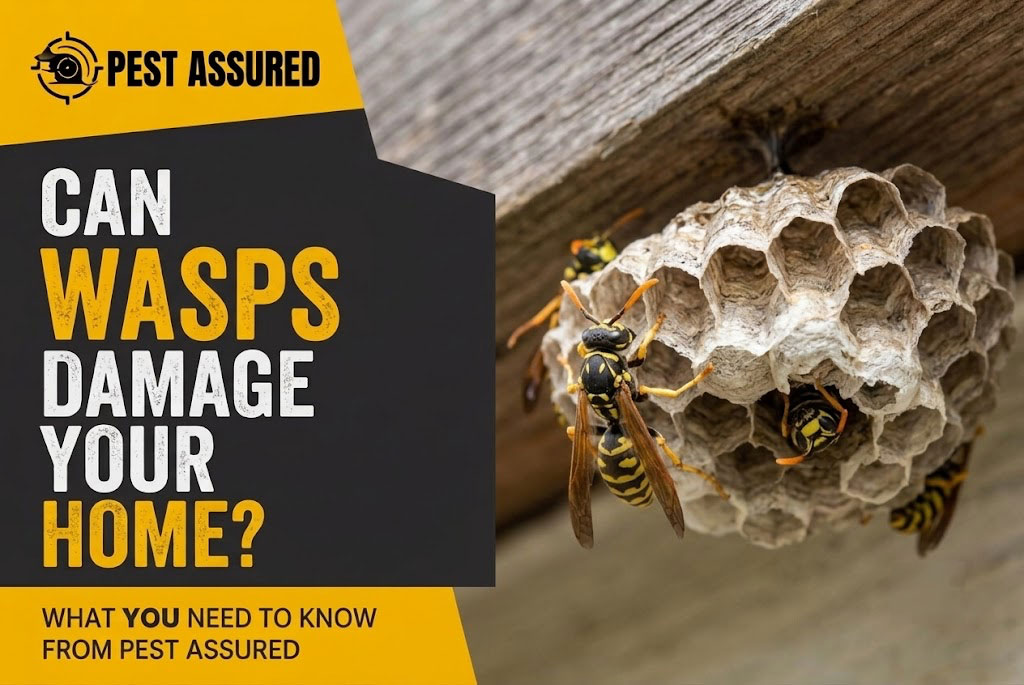
Can wasps damage your home
Many people worry that a wasp nest could damage their property. Learn what damage wasps can cause, what they don’t damage, and when it’s time to call Pest Assured.
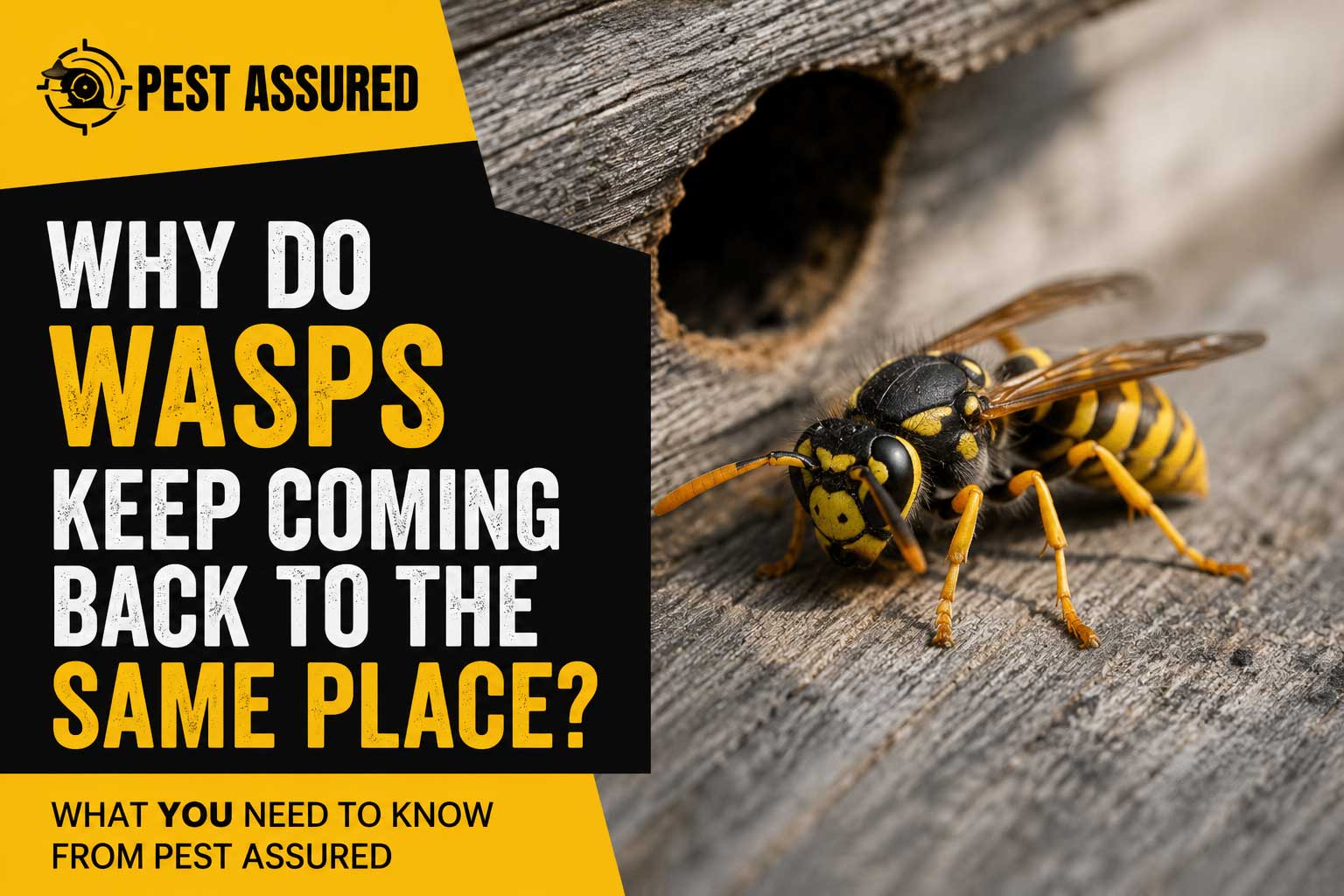
Why Do Wasps Keep Coming Back to the Same Place?
Wasps repeatedly returning to the same place usually means a nearby nest. Learn why it happens, where nests are commonly found and when it’s time to arrange professional treatment.
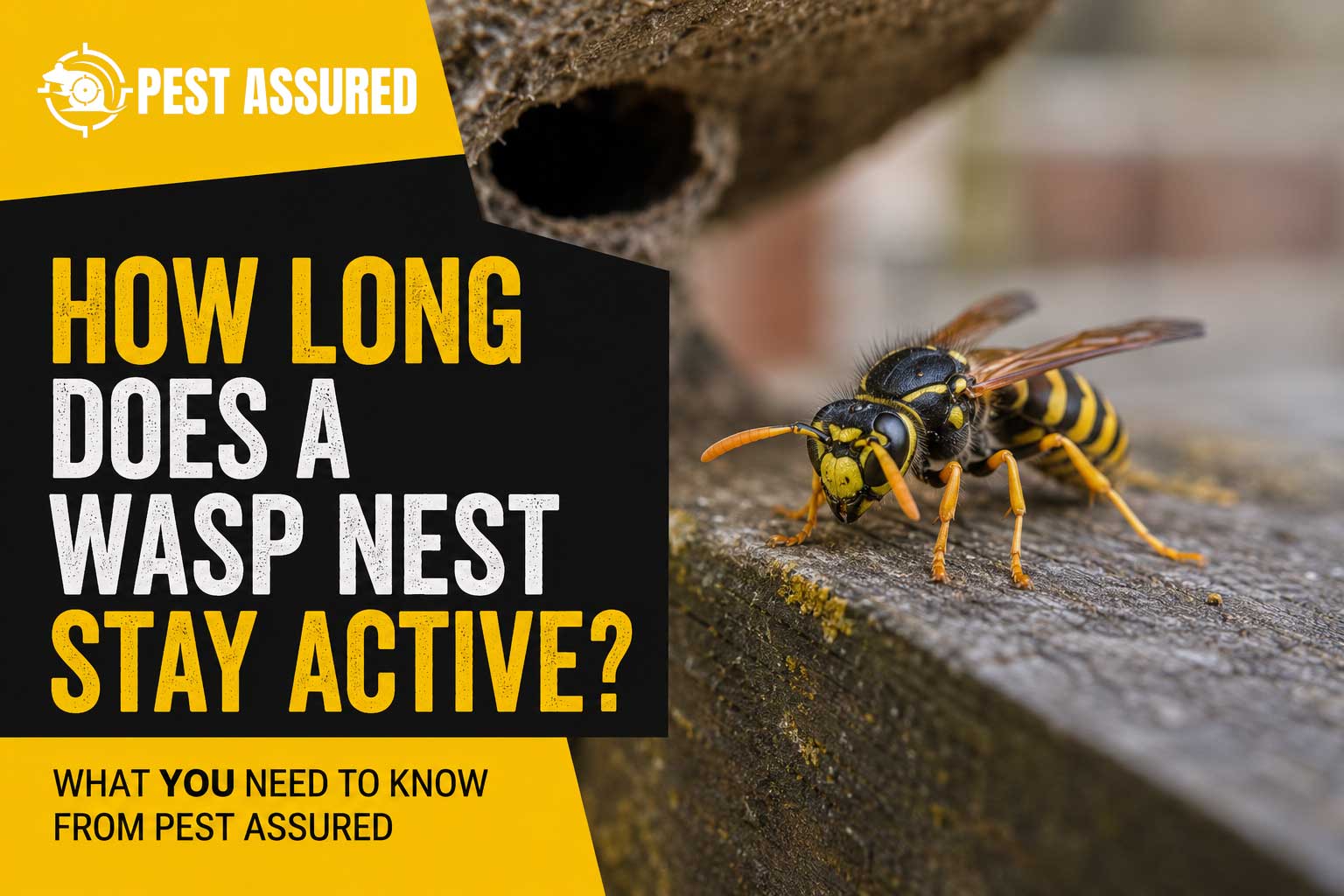
How Long Does a Wasp Nest Stay Active?
A wasp nest usually remains active for one season, becoming busiest during July and August. Learn how long nests last, what happens in autumn and when treatment may be needed.